When you visit the dentist, you may sometimes be recommended a dental X-ray even when your teeth look and feel perfectly healthy. But why are dental X-rays necessary, and what can your dentist actually see that they can’t see during a regular examination?
At Box Hill North Dental, digital dental X-rays are an important diagnostic tool that helps us get a more complete picture of your oral health.
Our clinic has both an OPG machine and a standard intraoral dental X-ray machine, which allows us to take different types of images depending on what we need to assess.
What is a digital dental X-ray?
Digital radiography is a modern form of dental X-ray imaging. Instead of using traditional X-ray film, digital X-rays use an electronic sensor to capture detailed images of your teeth, roots, bone and surrounding structures.
One of the benefits of digital radiography is that images can be viewed almost immediately. They can also be enlarged and adjusted, allowing your dentist to examine areas in greater detail and explain their findings to you.
Most importantly, dental X-rays can show us things that aren’t always visible during a standard dental examination.
Why does my dentist need an X-ray?
Your dentist can see a lot by examining your teeth and gums, but there are some areas that simply can’t be seen clearly from the outside.
Dental X-rays can help detect and assess:
- Tooth decay between teeth
- Decay underneath existing fillings or restorations
- The health of tooth roots
- Dental infections and changes around the roots
- Bone levels around the teeth
- Impacted or unerupted teeth
- Wisdom teeth
- Changes in the jaw
- Dental trauma
- Other abnormalities that may not be visible during a clinical examination
This is why an X-ray is often an important part of diagnosis. It gives your dentist additional information that, together with your examination and dental history, helps them make informed decisions about your care.
Why do I need an X-ray if I don’t have any pain?
It’s a common question, and an important one.
Not every dental problem causes pain, particularly in its early stages.
For example, tooth decay can develop between two teeth where it may be difficult to see during a visual examination. Similarly, changes around the root of a tooth may not cause noticeable symptoms until the problem has progressed.
A dental X-ray can help your dentist identify these issues before they necessarily become painful or more complicated.
This doesn’t mean that everyone needs an X-ray at every appointment. Your dentist will recommend an X-ray when there is a clinical reason to do so.
What is a bitewing X-ray?
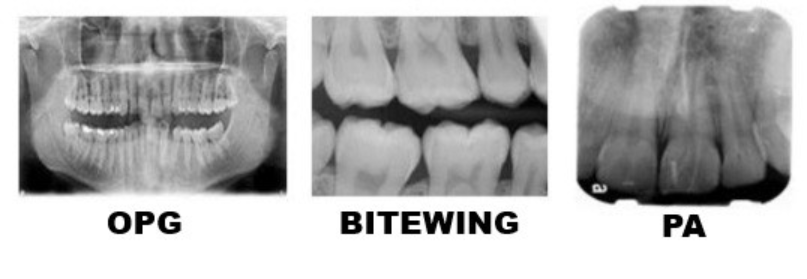
Bitewing X-rays are small intraoral X-rays that provide a detailed view of the crowns of your back teeth.
They are particularly useful for detecting decay between teeth, where the surfaces of neighbouring teeth touch and can be difficult to examine visually.
Bitewing X-rays can also help your dentist assess the level of bone around your teeth.
At Box Hill North Dental, we use our standard diagnostic X-ray machine to take bitewing X-rays when they are clinically appropriate.
What is a PA X-ray?
A periapical (PA) X-ray provides a detailed image of an individual tooth, including the crown, root and surrounding bone.
Your dentist may recommend a PA X-ray when investigating a specific tooth or area, particularly if you have symptoms such as pain or sensitivity.
PA X-rays can help us assess:
- The tooth root
- The area around the root
- Possible infection
- Changes in the surrounding bone
- Dental trauma
- Other concerns affecting an individual tooth
Because PA X-rays focus on a specific area, they can provide valuable detail when your dentist needs a closer look.
What is an OPG X-ray?
An OPG, or orthopantomogram, is a type of dental X-ray that provides a broad view of your teeth and jaws in a single image.
At Box Hill North Dental, we have an OPG machine that allows us to obtain this wider view when it is appropriate for your dental needs.
An OPG can provide an overview of:
- Your upper and lower teeth
- Wisdom teeth
- Developing or unerupted teeth
- The jawbones
- The position of teeth
- Surrounding structures
An OPG is particularly useful when your dentist needs to assess a larger area rather than focusing on one or two individual teeth.
OPG vs bitewing vs PA X-ray: what’s the difference?
While all three are dental X-rays, they are used for different purposes.
Bitewing X-rays
Provide a detailed view of the crowns of the back teeth and are particularly useful for detecting decay between teeth.
PA X-rays
Show an individual tooth from the crown to the root and the surrounding bone.
OPG X-rays
Provide a broader overview of the teeth and jaws.
Your dentist will determine which type of X-ray is most appropriate based on what they need to investigate. In some situations, more than one type of X-ray may be recommended.
Are dental X-rays safe?
Dental X-rays use ionising radiation, which is why they are only taken when there is a clinical reason for the image.
Modern digital dental X-ray equipment allows diagnostic images to be obtained using a relatively low radiation dose.
At Box Hill North Dental, we don’t take X-rays simply because it’s time for one. Your dentist considers your individual circumstances, dental history, clinical examination and risk factors when deciding whether an X-ray is appropriate.
If you have any concerns about dental X-rays, we encourage you to discuss them with your dentist.
If you are pregnant or think you may be pregnant, please let your dental team know before any X-ray imaging is performed.
How often do I need dental X-rays?
There isn’t a single schedule that applies to every patient.
The frequency of dental X-rays depends on a range of factors, including your oral health, age, dental history, risk of tooth decay, existing dental work, symptoms and the findings of your clinical examination.
Some patients may require X-rays more frequently, while others may only need them when there is a particular concern.
The aim is to take the right X-ray, at the right time, for the right clinical reason.
Why dental X-rays are an important part of your dental check-up?
A dental check-up isn’t just about looking at what’s visible.
Digital dental X-rays give your dentist another way of assessing your oral health and can help identify problems that may otherwise remain hidden.
At Box Hill North Dental, our OPG and intraoral X-ray equipment allow us to choose the appropriate imaging technique depending on what we need to assess, whether that’s a detailed look at a particular tooth or a broader view of your teeth and jaws.
If your dentist recommends an X-ray, don’t be afraid to ask questions. We can explain why the X-ray is needed, what we’re looking for and how the results may help with your dental care.
Contact the clinic on 03 9898 1119 or you can book an appointment, and we will be happy to assist you.