-
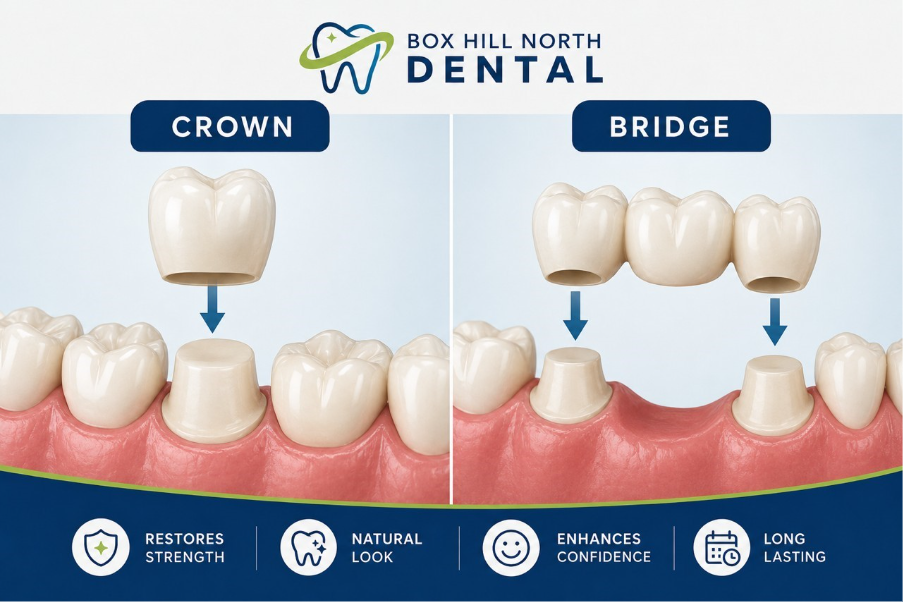
A dental crown protects and strengthens a weakened or damaged tooth by covering the visible portion of the tooth and helping prevent further damage.
-
You may need a crown if you have a large filling, cracked tooth, root canal-treated tooth, significant tooth wear, or repeated fractures.
-
Delaying treatment can make the problem worse. A weakened tooth may crack further, become infected, break beyond repair, or eventually require extraction.
-
A crown can help preserve your natural tooth by restoring its strength, function, and appearance while reducing the risk of more complex dental treatment.
-
Modern dental crowns are designed to look natural and can be matched to the colour, shape, and appearance of your surrounding teeth.
-
With good oral hygiene and regular dental care, many crowns can last 10–15 years or longer, although their lifespan depends on factors such as grinding, oral hygiene, diet, and the tooth’s location.
When you are recommended a dental crown, one of the first questions that comes to mind is usually: Do I really need it?
It’s a fair question. Unlike a routine filling, a dental crown is a more significant investment in your oral health, so it’s natural to want to understand whether it’s truly necessary and if it’s worth the cost.
The answer depends on the condition of your tooth, but in many cases, a crown can help save a tooth that might otherwise continue to deteriorate or eventually require extraction.
What exactly does a dental crown do?
A dental crown is similar to a protective helmet for your tooth.
When a tooth becomes weakened due to decay, a large filling, cracks, wear and tear, or trauma, it may no longer be strong enough to withstand normal chewing forces. A crown covers the entire visible portion of the tooth, helping to restore strength and function while protecting it from further damage.
In many situations, a crown is not simply about improving appearance, but also about preserving a tooth for the long term.
5 Signs you may need a dental crown
1. Your tooth has a large filling
Dental restorations are excellent for repairing small to moderate areas of decay. However, when a filling becomes very large, or if there are multiple different fillings on one tooth, there may not be enough healthy tooth structure left to support it.
A crown can provide the reinforcement needed to prevent the tooth from cracking under pressure.
2. You have a cracked tooth
Not all cracks cause immediate pain, but even small fractures can worsen over time.
If a crack spreads, the tooth may become difficult, or sometimes impossible to save. A crown can help hold the tooth together and reduce the risk of further damage.
3. You’ve had root canal treatment
After root canal treatment, the tooth often becomes more brittle than a healthy tooth.
Placing a crown is usually recommended to protect the tooth from breaking, particularly on back teeth that absorb significant chewing forces.
4. Your tooth is worn down
Teeth can wear down gradually due to grinding, clenching, acid erosion, or years of use.
If excessive wear begins affecting function or appearance, a crown may help restore the tooth’s shape and strength.
5. You’re experiencing ongoing tooth fractures
If you’ve had a tooth repaired multiple times and it continues to chip or break, a crown may offer a more durable long-term solution.
What happens if you delay getting a crown?
One of the biggest misconceptions is that a damaged tooth will remain stable if it isn’t causing pain.
Unfortunately, teeth rarely repair themselves and without treatment, a weakened tooth may:
- Crack further
- Become increasingly sensitive
- Develop infection
- Break beyond repair
- Eventually require extraction
In many cases, treating the problem early with a crown can help avoid more complex and costly procedures later.
Is a dental crown worth the cost?
Many patients wonder whether a crown is worth the investment compared to simply waiting or choosing a less expensive option.
The real question is often not “How much does a crown cost?” but rather “What happens if I don’t protect this tooth?”
A crown can provide value by:
- Extending the life of a damaged tooth
- Restoring comfortable chewing
- Preventing further fractures
- Improving appearance and confidence
- Reducing the likelihood of future dental treatment
For many people, preserving a natural tooth is considerably simpler and more affordable than replacing a tooth that has been lost.
Benefits of getting a dental crown
In addition to repairing a damaged tooth, a crown helps to restore strength, function, and appearance.
Some of the key benefits include:
Protection
Protects weakened teeth. A crown covers and reinforces a tooth that has been weakened by decay, cracks, large fillings, or root canal treatment, reducing the risk of further damage.
Function
Crowns restore normal chewing function and allow you to bite and chew more comfortably and confidently, particularly if the tooth has become painful or fragile.
Preserves your natural tooth
Whenever possible, saving your natural tooth is preferable to removing it. A crown can help extend the life of a compromised tooth and delay or prevent the need for extraction.
Improves appearance
Modern crowns are carefully designed to match the colour, shape, and size of your surrounding teeth, creating a natural-looking smile.
Durability
Provides long-term durability as it is made from strong, high-quality materials. Dental crowns are built to withstand the forces of everyday chewing.
May reduce future dental treatment
By protecting a vulnerable tooth before it fractures or becomes infected, a crown can help prevent more complex procedures, such as emergency treatment, root canal treatment, or tooth replacement.
Ultimately, the greatest benefit of a dental crown is that it helps preserve your natural tooth. Rather than waiting for a damaged tooth to deteriorate further, treating it early with a crown can provide a predictable, long-lasting solution that supports both your oral health and your quality of life.
Crown vs Filling: Which is better?
There isn’t a one-size-fits-all answer.
A filling is often the best option when damage is relatively minor and enough healthy tooth remains.
A crown is usually recommended when the tooth has lost substantial structure and requires additional protection.
The goal is always to choose the most conservative treatment that will provide a predictable long-term outcome.
How long do dental crowns last?
One of the reasons crowns are often considered worthwhile is their longevity.
With good oral hygiene and regular dental check-ups, many crowns can last 10 to 15 years or longer.
Factors that can influence lifespan include:
- Oral hygiene habits
- Teeth grinding or clenching
- Diet and lifestyle
- The location of the crown
- Regular professional maintenance
Are dental crowns noticeable?
Modern dental crowns are designed to look very natural.
Advanced materials allow crowns to closely match the colour, shape, and translucency of surrounding teeth, making them difficult to distinguish from natural teeth.
Many patients report that friends and family cannot tell which tooth has been restored.
What about dental bridges?
While dental crowns are used to strengthen and protect existing teeth, a dental bridge is designed to replace one or more missing teeth.
A bridge typically consists of an artificial tooth (or teeth) that is supported by crowns placed on the neighbouring teeth. Bridges can help restore chewing function, improve appearance, and prevent surrounding teeth from shifting into the gap left by a missing tooth.
In some cases, crowns and bridges work together as part of the same treatment. If a tooth cannot be saved and requires extraction, a bridge may be one option for replacing it.
The most suitable solution depends on your individual circumstances, including the health of neighbouring teeth, the location of the missing tooth, and your long-term oral health goals.
At Box Hill North Dental, Dr Indran Shan provides personalised advice on dental crowns, bridges, and other restorative treatment options, helping patients make informed decisions about protecting damaged teeth and replacing missing ones. If you’re unsure which solution is right for you, a comprehensive dental assessment can help you understand your options and choose the most appropriate long-term treatment.
Contact us or book your appointment online .